 Image 1 of 1
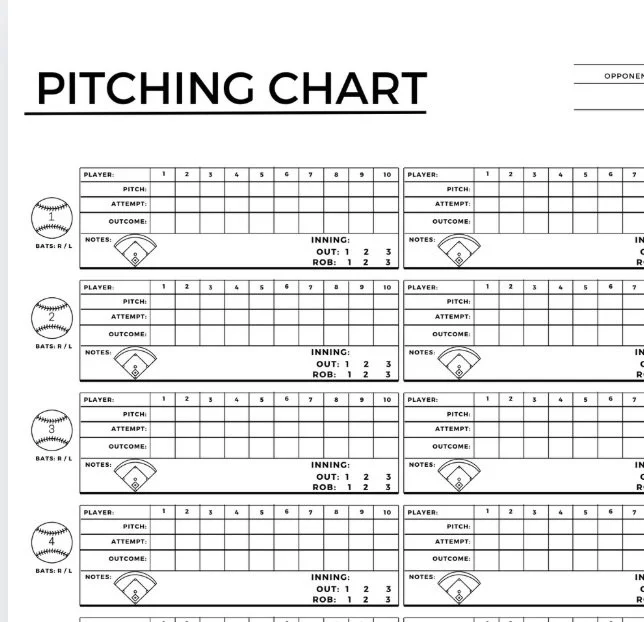
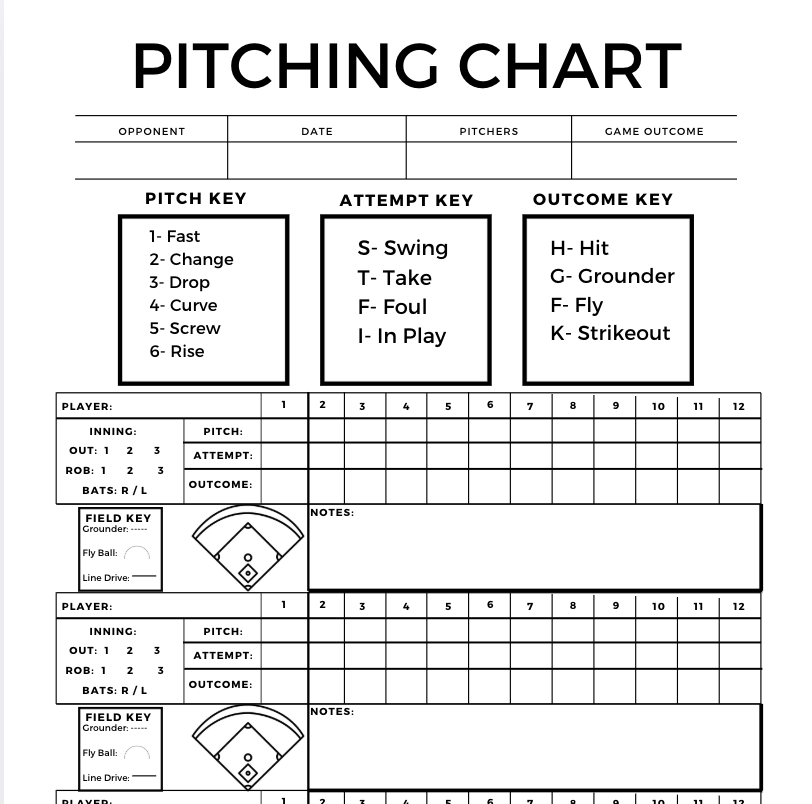
Track every pitch with purpose using the Softball with Margo Pitching Chart. This detailed game-day tool gives coaches, pitchers, and catchers an organized way to record pitch sequences, hitter reactions, outcomes, and ball placement for every opponent in the lineup.
The chart includes easy-to-follow keys for pitch type, batter attempt, and play outcome. Each hitter section also provides space to document the inning, number of outs, runners on base, batting side, field location, and additional notes. Coaches can record up to 12 pitches per plate appearance while building a complete picture of how each hitter is being attacked.
Use this chart to:
Record pitch types and sequences
Track swings, takes, fouls, and balls put in play
Document hits, ground balls, fly balls, and strikeouts
Mark where the ball was hit on the field
Identify hitter tendencies and weaknesses
Evaluate pitcher execution and game strategy
Improve communication between coaches, pitchers, and catchers
Make more informed decisions in future at-bats
Whether used during games or reviewed afterward, this chart helps pitching staffs recognize patterns, make better adjustments, and approach every hitter with a clear plan.
Track every pitch with purpose using the Softball with Margo Pitching Chart. This detailed game-day tool gives coaches, pitchers, and catchers an organized way to record pitch sequences, hitter reactions, outcomes, and ball placement for every opponent in the lineup.
The chart includes easy-to-follow keys for pitch type, batter attempt, and play outcome. Each hitter section also provides space to document the inning, number of outs, runners on base, batting side, field location, and additional notes. Coaches can record up to 12 pitches per plate appearance while building a complete picture of how each hitter is being attacked.
Use this chart to:
Record pitch types and sequences
Track swings, takes, fouls, and balls put in play
Document hits, ground balls, fly balls, and strikeouts
Mark where the ball was hit on the field
Identify hitter tendencies and weaknesses
Evaluate pitcher execution and game strategy
Improve communication between coaches, pitchers, and catchers
Make more informed decisions in future at-bats
Whether used during games or reviewed afterward, this chart helps pitching staffs recognize patterns, make better adjustments, and approach every hitter with a clear plan.